Detroit is home to countless art, culture, community and performance venues, each a unique and crucial part of the city’s history and deep musical roots.
But whether you’re a lifelong resident, recently moved to the city or are just in town for a short time and looking for world-class artistry, the Detroit Symphony Orchestra is a must-see among those iconic attractions.
Defined by legacy, partnership and innovative thinking, the DSO offers enough to keep every audience member and visitor wanting to come back and experience more.
America’s fourth oldest orchestra, the DSO has been a part of Detroit since before the time of the legendary Model T, striving for artistic excellence all the way.
It offers riveting, diverse performances with programming intentionally curated years in advance. The DSO serves as a community anchor, a place in which to get lost in art, and a place to find oneself in it, too. Its longstanding journey is, in part, reflective of the journey of the city of Detroit, one that keeps reinventing itself and all the while, working to give back to those who make it the great place it is.
The DSO takes pride in its legacy, is regularly inspired by its audiences and celebrates diversity in music.
“From the musicians who helped craft the Motown sound to the world-class artists performing on our stage today,” Rönmark said, “we exist to bring the transformative power of music to every Detroiter, and to keep finding new ways to do that for generations to come.”
DSO highlights at a glance
More than a century in, the DSO’s attendance is strong; it saw its highest ticket sales and revenue to date with the 2024-2025 season, and loyal subscription members fill seats each year.
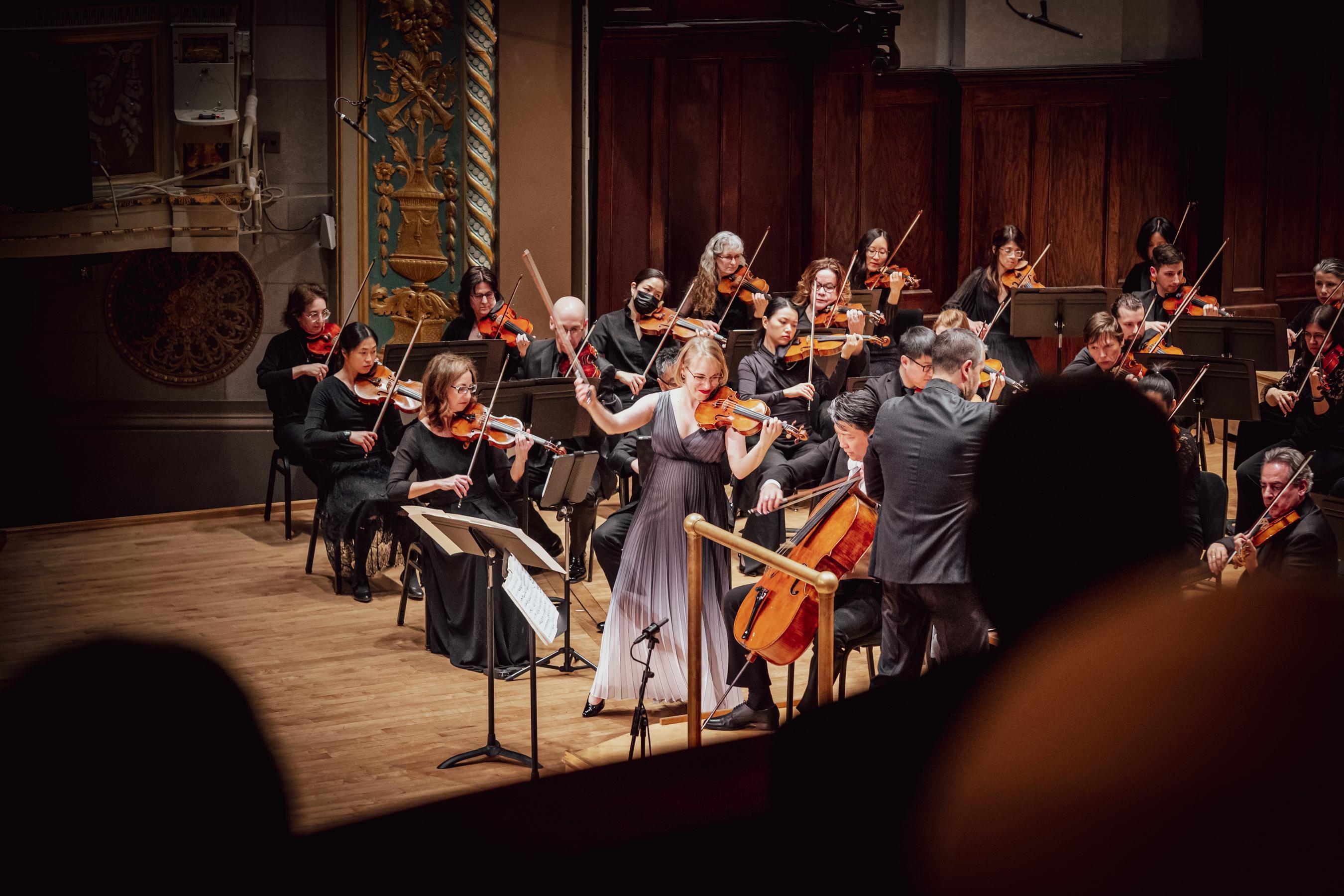
That may be because – while the DSO has roots in classical symphonic music – visitors can expect a diverse selection of film in concert experiences, Broadway music, cross-genre collaborations and more, a nod to Detroiters’ many musical tastes. The DSO looks to truly offer something for every music-lover.
Over the years, visitors have come to the DSO for works from Bach, Beethoven, Mozart and more, and guest performances from world-class icons of music; Yo-Yo Ma, John Williams and Michael Abels among them.
For the festive visitor, the DSO’s Home for the Holidays and Home Alone in Concert are annual holiday programs that sell out year after year.
And for those wanting something entirely unique, the DSO also has international recognition; its performance with Icelandic post-rock supergroup Sigur Rós at Masonic Temple is just one recent example.
The Orchestra is also proud to be part of historic moments for the city, collaborating in ways that emphasize its musical legacy and even automotive prowess. Whether attending the Michigan Central Station re-opening and backing Detroit native Eminem; hosting another fellow Detroiter, Big Sean for a concert; or developing symphonic chimes for the Lincoln Aviator, the DSO has long been a city mainstay.
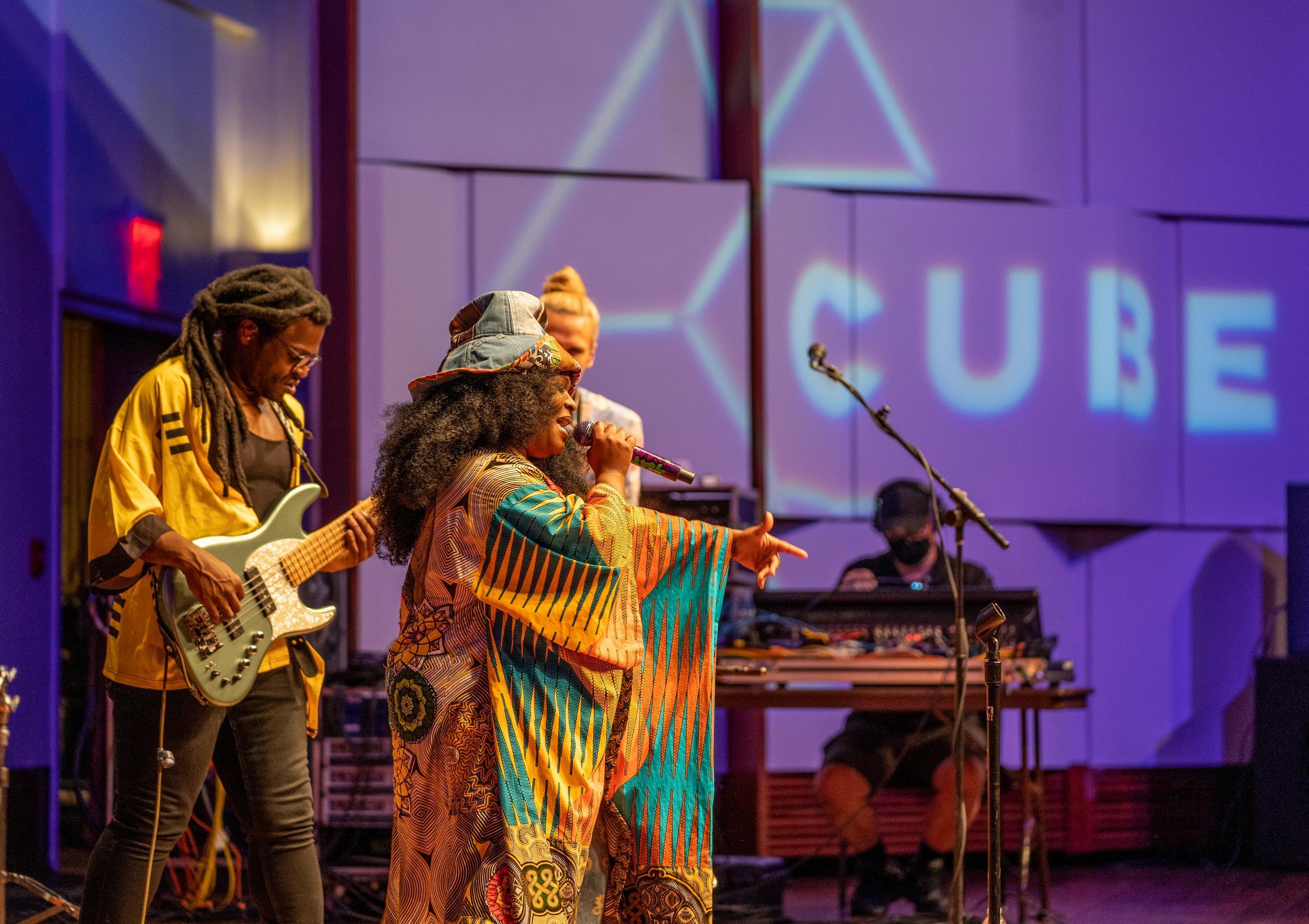
But perhaps among its most culturally significant contributions is Classical Roots, a quintessential DSO program honoring African American composers, classical musicians and leaders, the Orchestra says. Readers can find more details about this incredibly moving program later in this piece.
The DSO plans to remain committed to the city for future decades in many ways. But first, it’s important to take a journey back through its history to truly appreciate why it is known as “the center of Detroit’s musical heartbeat.”
More than a century ago and early 1900s
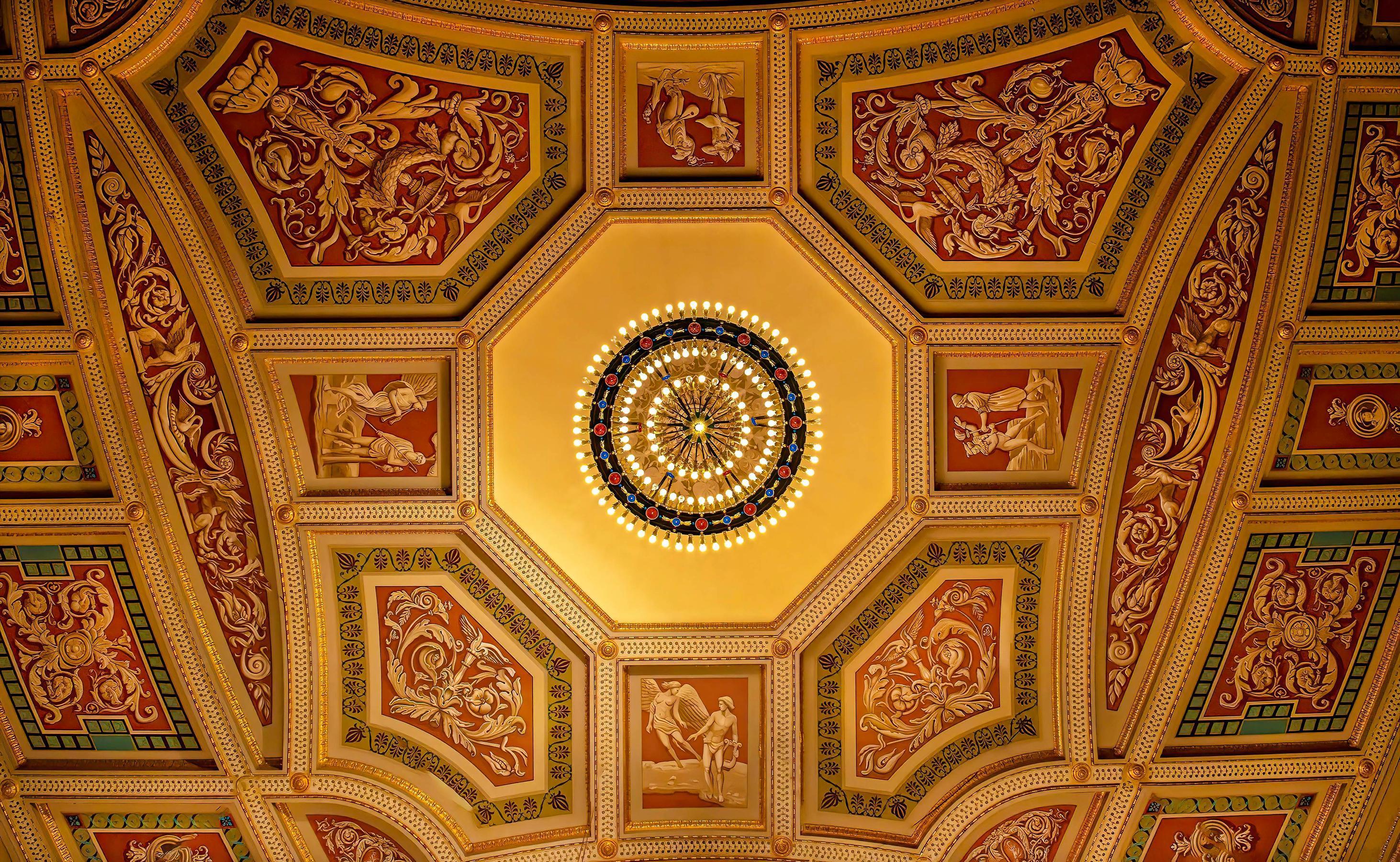
The DSO has undergone countless iterations throughout its storied history since performing its first subscription concert on December 19, 1887 at the celebrated Detroit Opera House.
Several conductors later, it stopped operating in 1910. But the idea behind the DSO persisted just a few short years after; a group of subscribers contributed the funds to get it back up and running, with Weston Gales serving as music director from 1914 until 1917. Once succeeded by Russian pianist Ossip Gabrilowitsch – the son-in-law of Mark Twain – the DSO soon became what many saw as unstoppable.
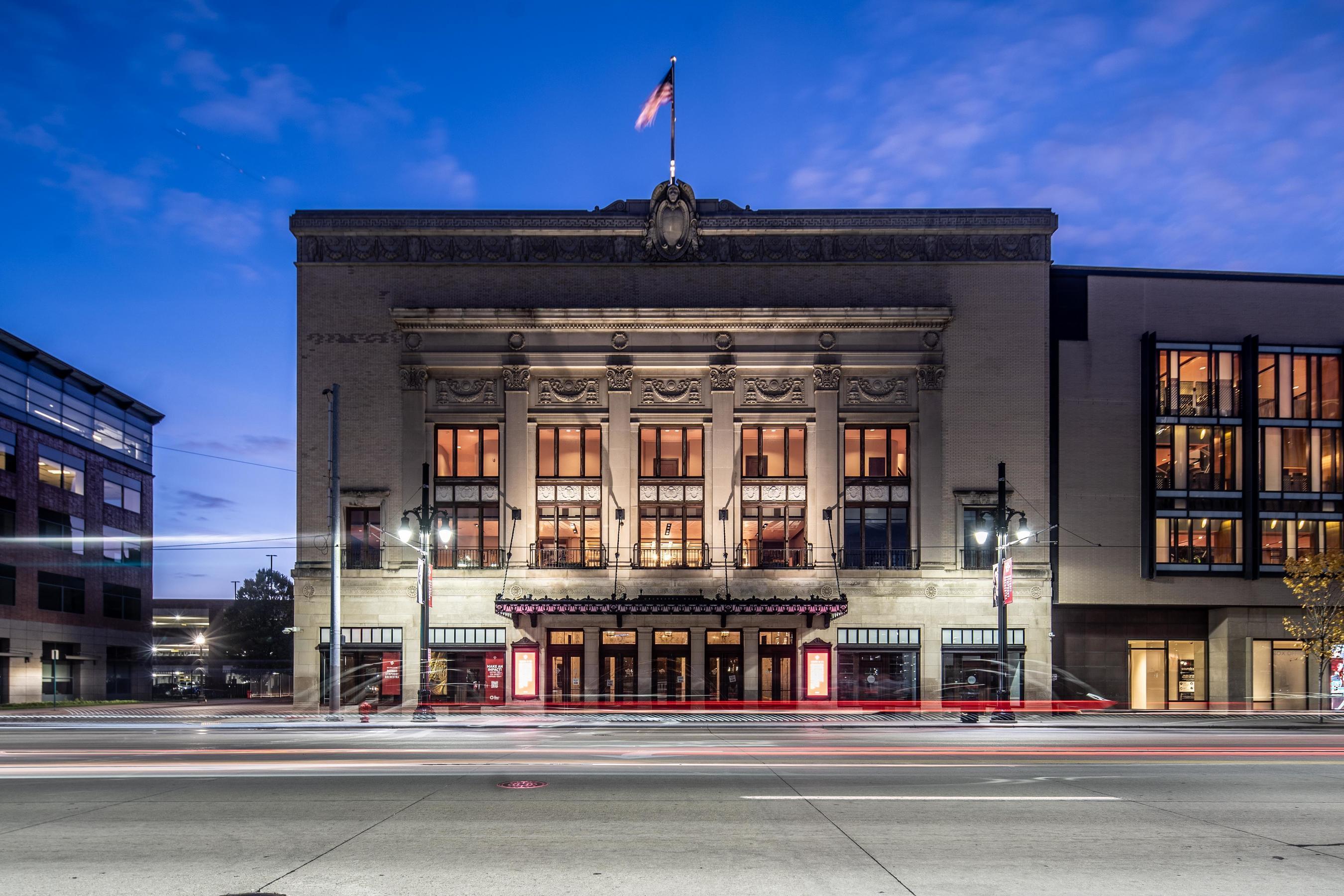
According to DSO history, Orchestra Hall was designed by architect C. Howard Crane and built in less than five months during the summer of 1919 with Gabrilowitsch at the helm. It is said any of the 2,000 seats in the hall, which is classic and elegant in design, will provide a near-perfect acoustic experience. It continues to sit today in Detroit’s Midtown neighborhood at the intersections of Woodward Avenue and Martin Luther King Jr. Boulevard.
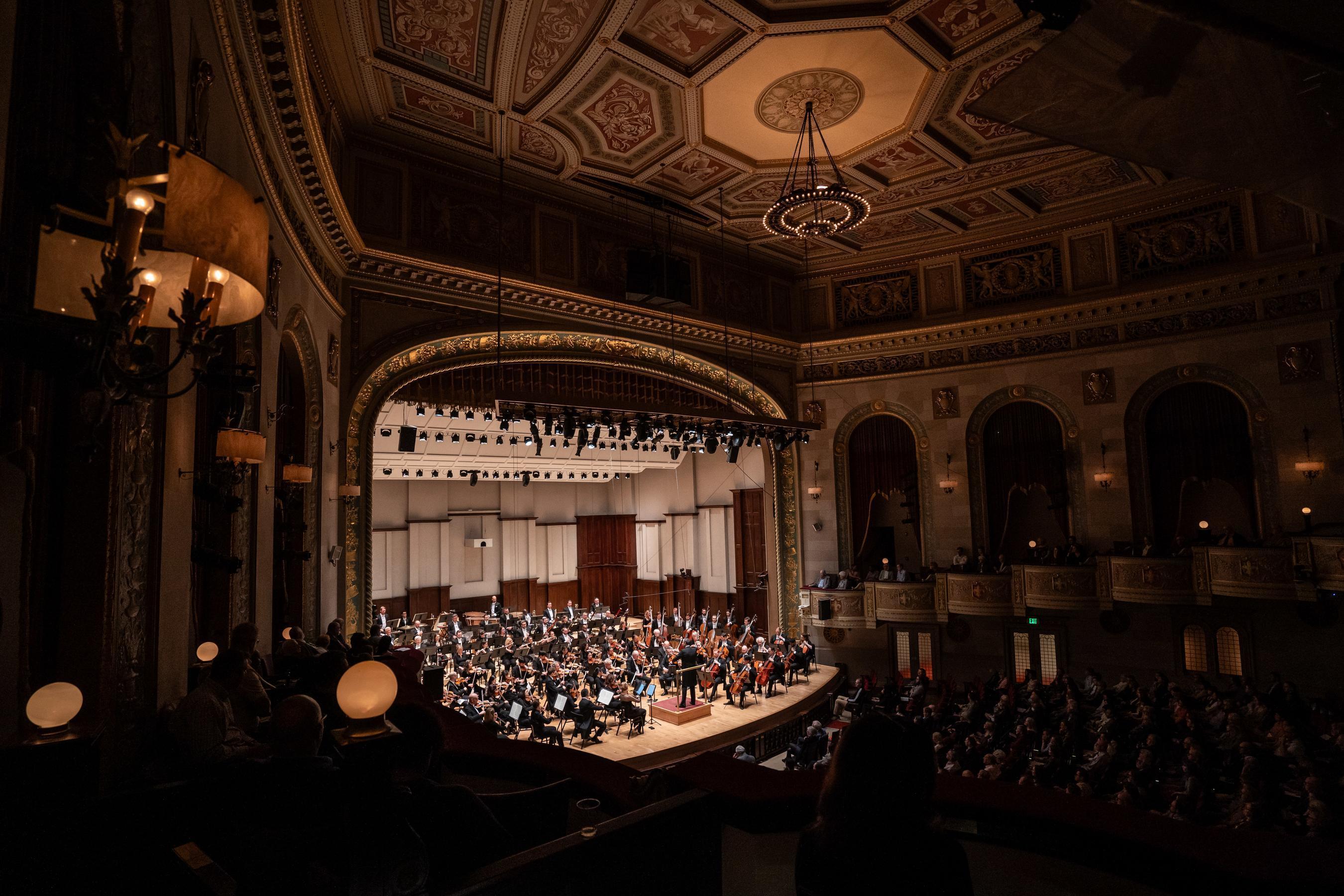
The DSO hit several milestones: the new hall’s opening with a sold-out concert in October 1919, becoming the first orchestra to broadcast a concert on the radio in 1922, and making its first recording at a performance at the distinguished Carnegie Hall in 1928. Times were good at the DSO and in the city; booming automotive manufacturing, for example, created immense opportunities. At the time, Detroit was among the most populated cities in the country and an incredibly important economic hub fueled by industrial activity.
Amid the Great Depression, the 1930s and 1940s were a challenging time for all, including the DSO. In 1939, the DSO left Orchestra Hall and – even after hitting other milestones such as becoming the country’s first official radio broadcast orchestra – disbanded in 1942 as the United States entered World War II. It was resurrected in 1944, playing not at Orchestra Hall but instead Music Hall, just to disband again in 1949.
Meanwhile, Orchestra Hall became known as Paradise Theater. The name was a nod to Paradise Valley, a nearby entertainment district for Detroit’s Black community that hosted famous artists from Louis Armstrong to Ella Fitzgerald and more, operating from 1941 to 1951.
Mid-century onward
The 1940s didn’t spell the end of the DSO as it was first intended, but the coming years were not without difficulty. In the 1950s, Paul Paray was hired to lead the DSO “into a golden age of recording,” according to its website. A golden age, indeed; Detroit, then, for a short time became the wealthiest city in the U.S.
In those days, the orchestra operated out of the Masonic Temple – another musical stalwart in the city – and sometimes from Orchestra Hall, and then moved to the Ford Auditorium on the Detroit River. The DSO found massive success playing here in the 1960s and 1970s under conductors Sixten Ehrling, Aldo Ceccato, Antal Dorati and Günther Herbig.
But Orchestra Hall itself (at the time, the Paradise Theatre) fell into disrepair, and was nearly demolished in 1970; at the same time, Detroit population began to fall. But advocates saved the building from the plans, and a historical architecture rescue project began.
The DSO returned to Orchestra Hall in September 1989, nearly two decades and more than $6 million in critical repairs later.
The modern era
Music director Neeme Järvi was tasked with leading the new DSO in the early ’90s, and with him at the helm, concert subscriptions doubled, broadcast syndication tripled and reviews raved for new DSO recordings.
Those years also led to the completion of Orchestra Hall’s massive expansion known as the Max M. and Marjorie S. Fisher Music Center in 2003, which remains home to the DSO today.
The 2019-2020 season marked the centennial of Orchestra Hall. Italian jazz aficionado Jader Bignamini has been serving as the DSO’s 18th music director since 2020.
The DSO continued to evolve even in recent history; it has lowered its ticket prices and prioritized accessibility, offering sensory-friendly opportunities. It also began free, live webcasts of its performances.
Detroit's population, meanwhile, has increased for two years in a row amid large economic investments and new opportunities for residents, workers and small businesses in the city. While there is still more to be done in Detroit’s resurgence to ensure these efforts reach all corners of the city equitably, the DSO continues to play its part in the community, engaging with locals and organizations and supporting artistic expression in a number of ways.
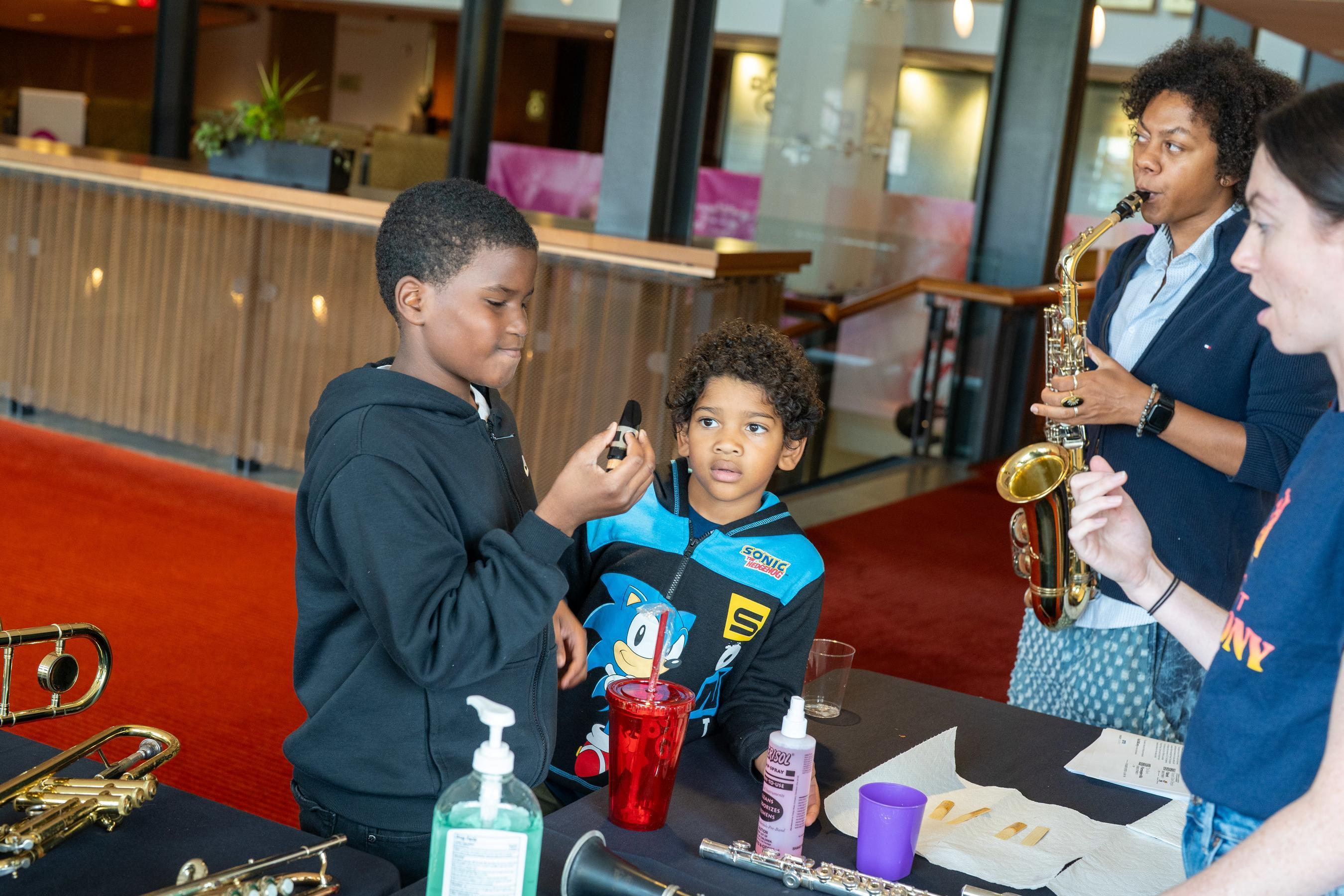
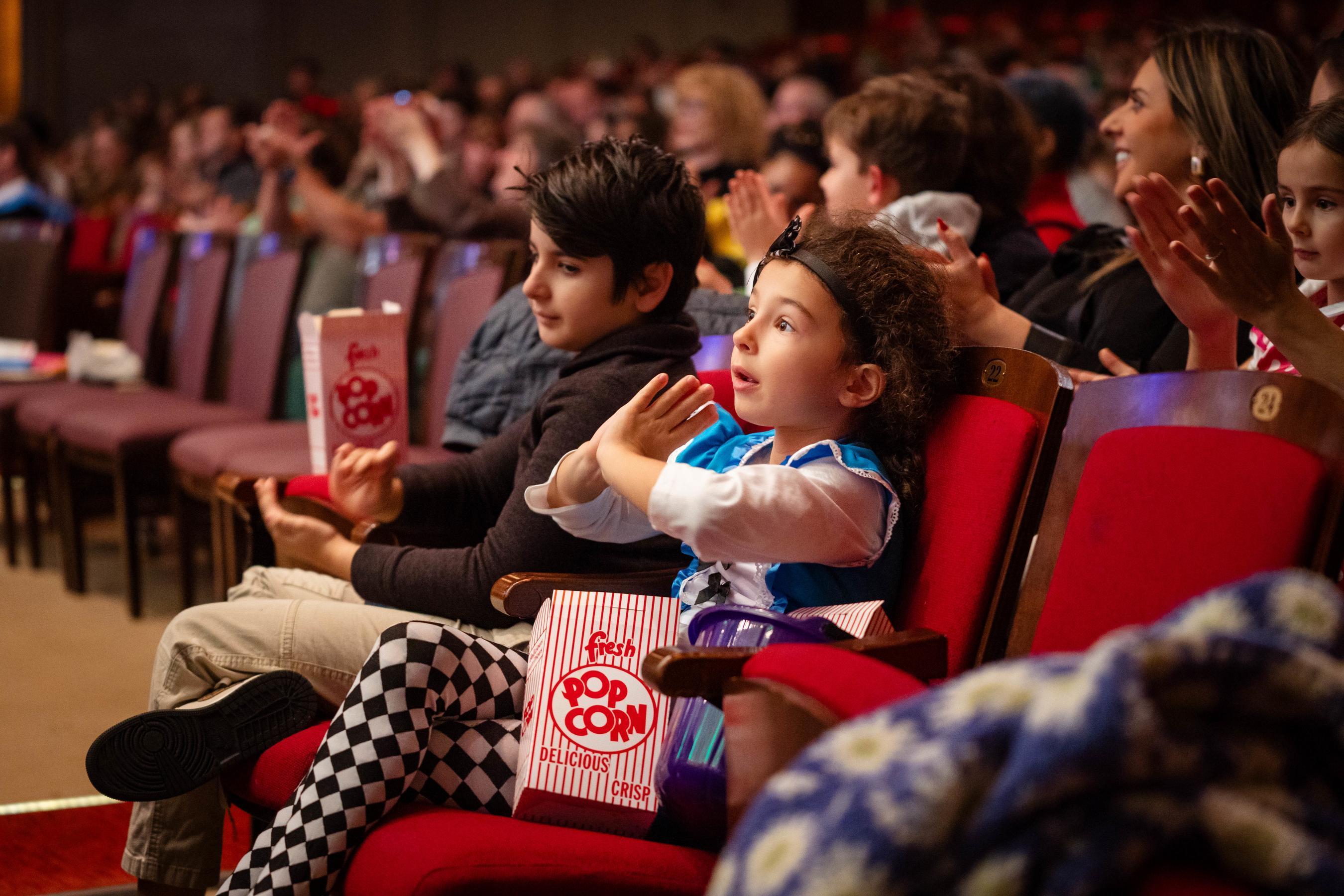
It is home to the Wu Family Academy for Learning and Engagement, an effort to empower students to pursue music. The academy’s training programs, educational concert series, family concerts, ensembles and more are some of the ways in which the DSO hopes to connect different music genres with younger generations.
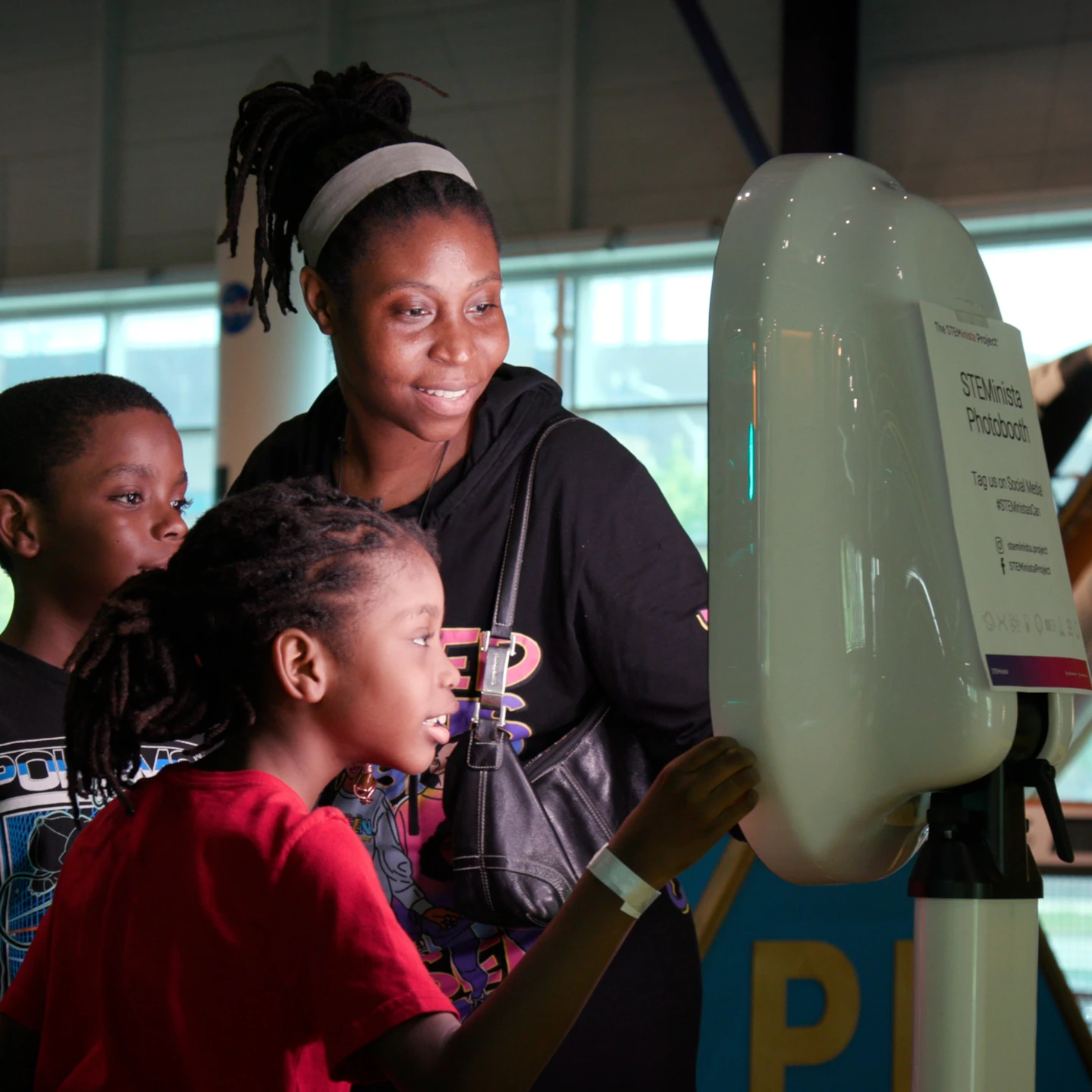
The DSO also brings pop-up performances to community-based groups and other settings; partnering with institutions such as Detroit Zoo, the Michigan Science Center and more to bring music to unexpected places, and performing for veterans, first responders and healthcare workers.
Through its Detroit Strategy, the DSO aims to collaborate with local youth, workers, services and neighborhoods through a host of other initiatives. The Detroit Harmony effort, which partners with local organizations, schools and artists, supports citywide music education and access to instruments.
Key programming and highlighting Classical Roots
The DSO, leadership and staff welcome guests to all of its impressive and diverse programming. Throughout 2026 alone, visitors can expect to hear the sounds of the ’60s and ’70s California rock scene, Dvořák’s “New World” Symphony, Tchaikovsky’s Swan Lake, Pink Martini, West Side Story, Viva Las Vegas with Frankie Moreno, Harry Potter in concert, French splendor, and much, much more.
But prospective visitors should especially consider the DSO’s Classical Roots, which looks to “remember, discover, and preserve the spiritual music of the African American experience and culture,” according to the orchestra.
The concert portion of the program, which was first performed in 1978 at the nearby Bethel A.M.E. Church, thoughtfully and brilliantly showcases choral music of all genres. A flier for the inaugural Classical Roots said it would bring the orchestra “to the people and trace the musical heritage of Black America.”
It took on a life of its own, bringing together members of the Brazeal Dennard Chorale – one of the nation’s longest-standing organized choral groups – along with local area church choir singers. Today, both remain a treasured presence in each Classical Roots performance, which always starts with the official African American National Hymn, “Lift Every Voice and Sing.”
Classical Roots has been an annual tradition, and moved to Orchestra Hall three years after its first show.
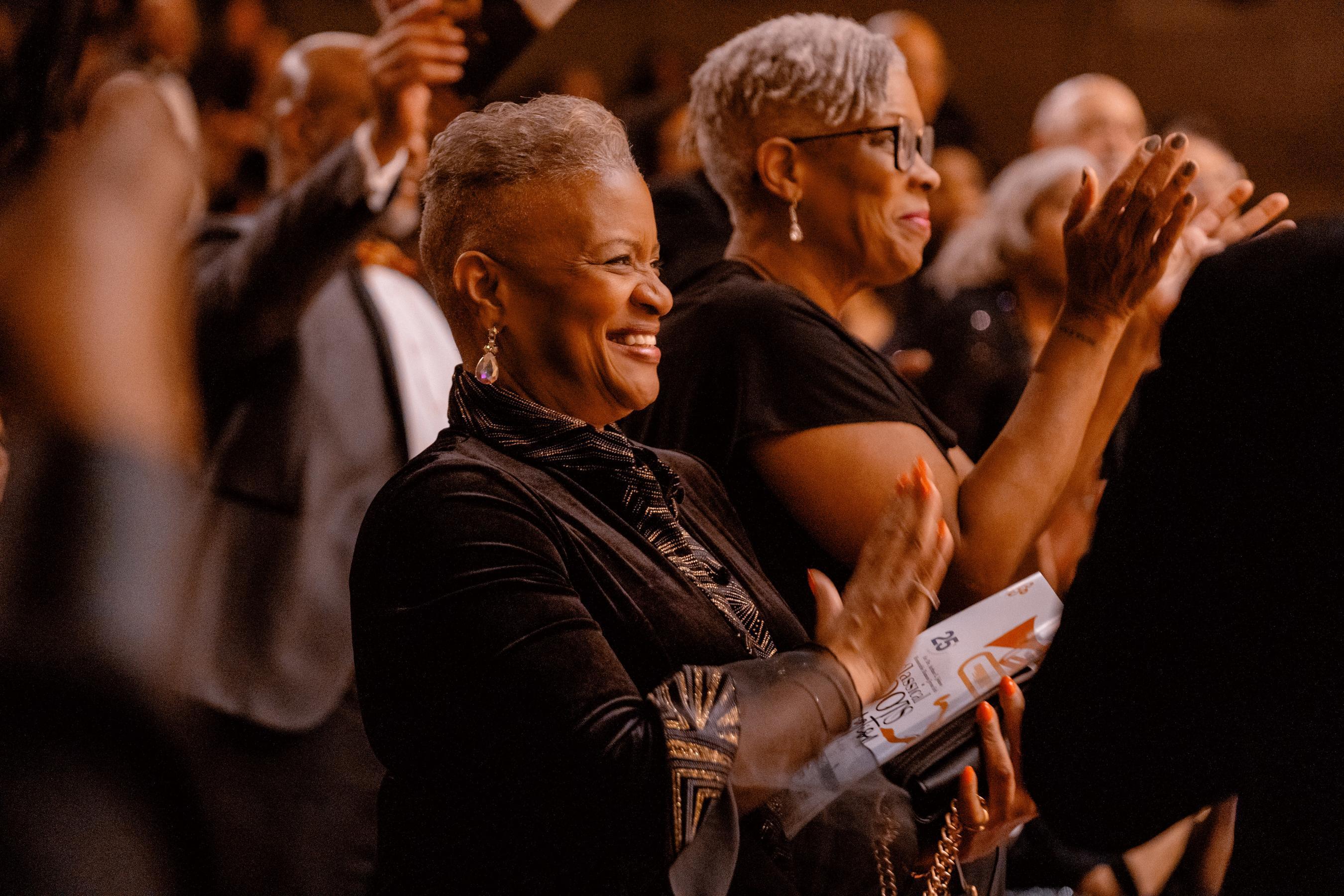
Over the years, the program has grown inside and outside of the Hall, to include school visits, community events, the African American Composer Residency and the African American Orchestra Fellowship. Its annual weekend now includes a black-tie gala and fundraiser – this year marking its 25th – honoring Black musicians, leaders and philanthropists each year to support those programs.
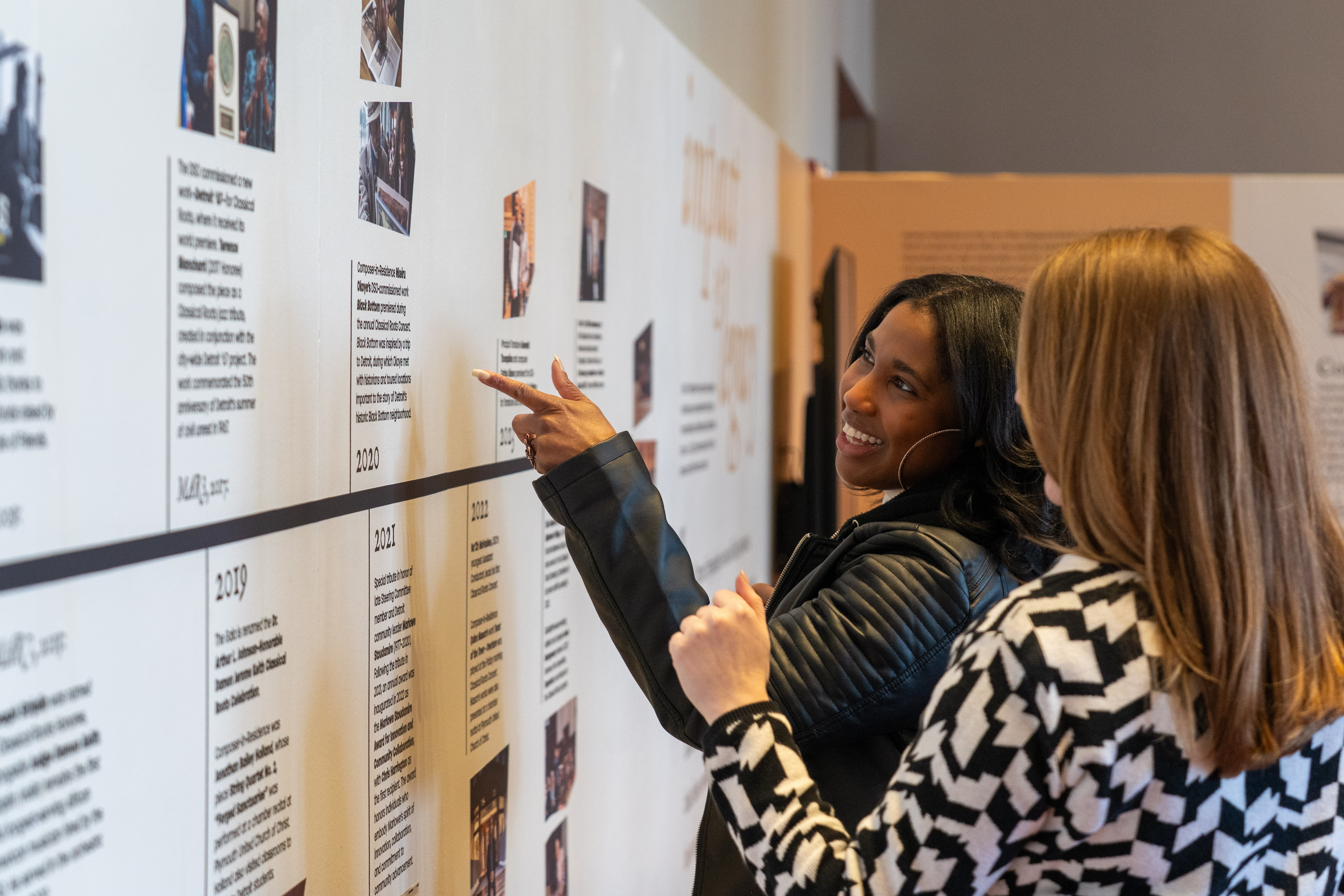
As Classical Roots is looking to an impressive 50th anniversary in 2028, the DSO will represent its important history with an exhibit at the Hall through 2028. The experience is sure to educate and inspire.
It’s "far more than an annual celebration — it is a mission we carry forward every single day,” Rönmark said, “and a deep commitment to ensuring that the voices and legacies of Black composers and musicians are heard on our stage.”
He added: “We are more inspired than ever to honor — and build upon — this history."
EXPLORE MORE

Detroit’s Theatre Scene Is the Main Character

Detroit’s musical legacy is as integral to its identity as the auto industry. Few cities…

Oakland County lies just north of Motown, and as expected has always had an impressive…