
The story of Detroit is older than the story of America itself. From the moment Antoine de La Mothe Cadillac, accompanied by approximately one hundred fellow Frenchmen and an additional one hundred Algonquian Indians, established Fort Pontchartrain du Detroit on July 24, 1701, on a site that is today in downtown Detroit, we were destined for greatness.
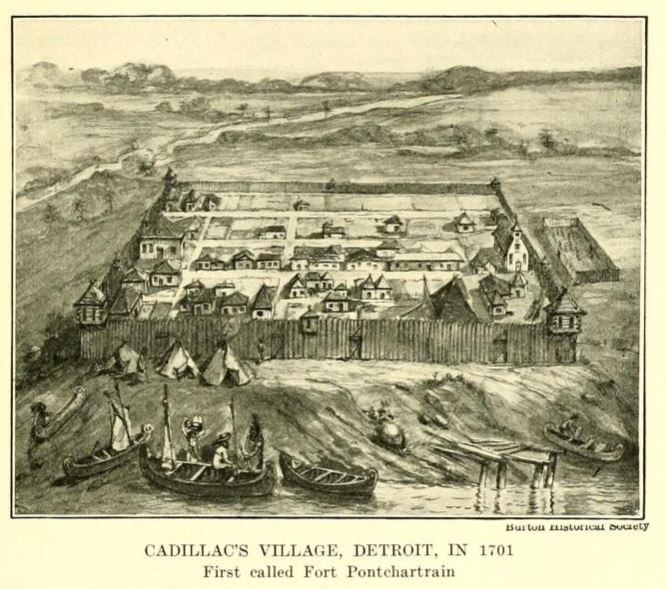
Detroit has had an impact on American industry and economics, and its culture is historically significant. As America celebrates her 250th birthday, let's explore some of the ways that our fair city has had a lasting impact on the history of this nation.
A Timeline of Detroit by the Detroit Historical Society details that the first peoples in the area were called The People of the Three Fires, the Anishinaabeg confederacy in the Great Lakes region, comprising the Ojibwe (Chippewa), Odawa (Ottawa), and Potawatomi (Bodéwadmi) nations.
They were followed by the French, who ruled the territory for 60 years, during which they worked the land and slowly built a city through a lucrative fur trade. Perhaps the richest legacy of the French on Detroit is the establishment of "Ribbon Farms," which became the imprint for how streets would be laid out in the city. Further, they were often named after the French families who owned them, leaving a legacy of French street names to this day.
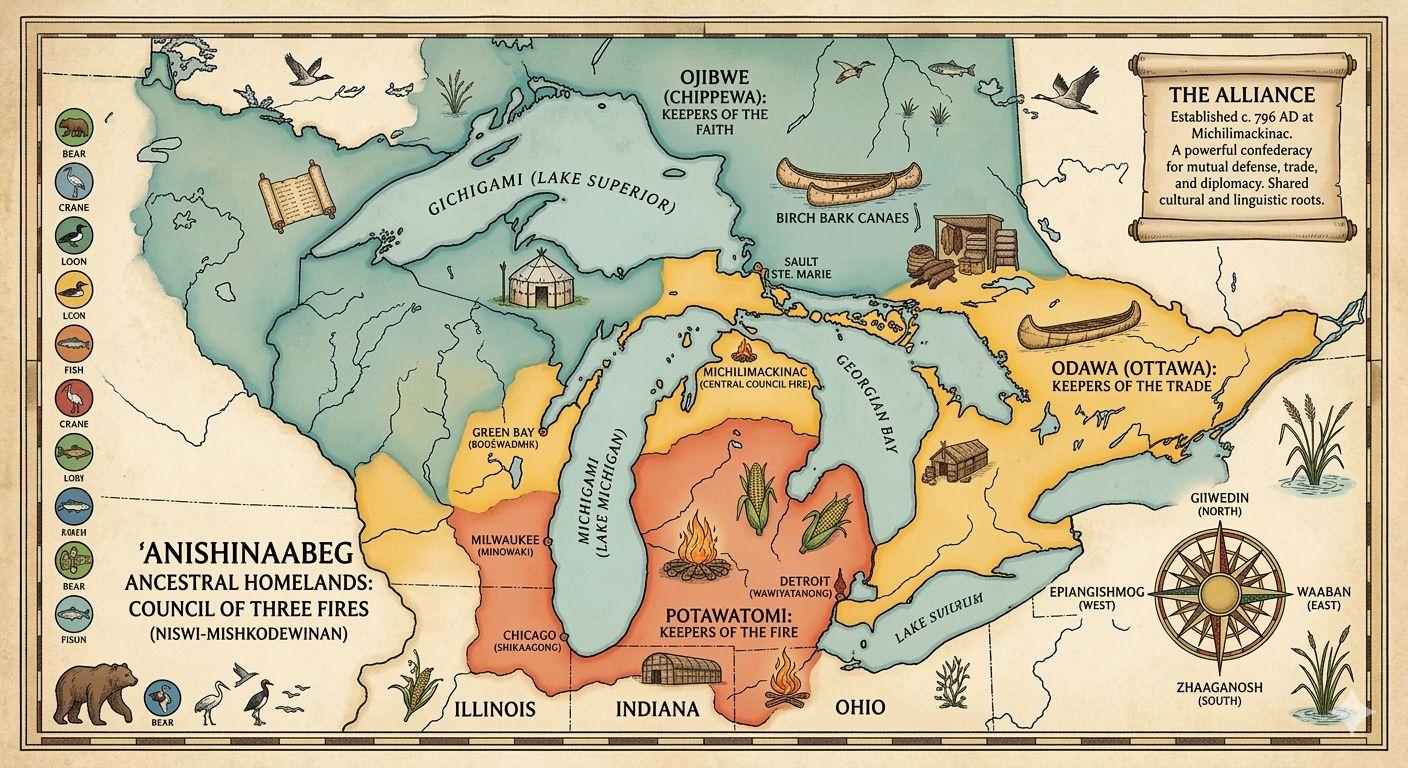
The Detroit Historical Museum is an excellent place to explore some of Detroit's early stories.
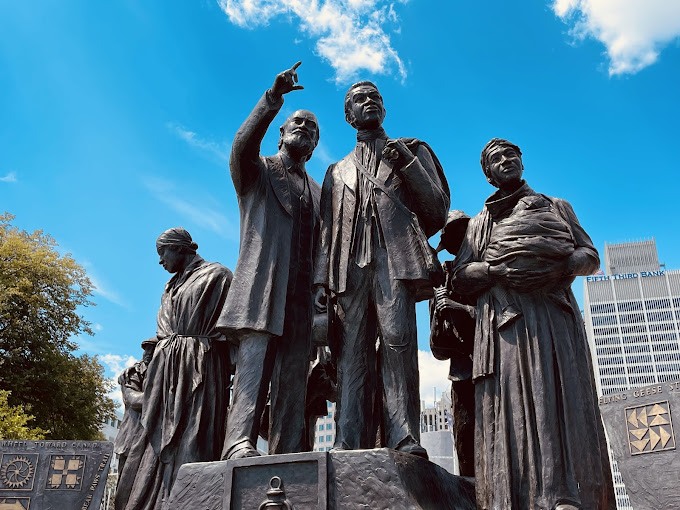
Detroit's proximity to Canada made it an optimal outpost for the Underground Railroad. The city's code name was "Midnight," and it was a secret network of financial, spiritual, and material aid for formerly enslaved people on their path to freedom.
But the Underground Railroad would not be the last time scores of African Americans traveled to Detroit.
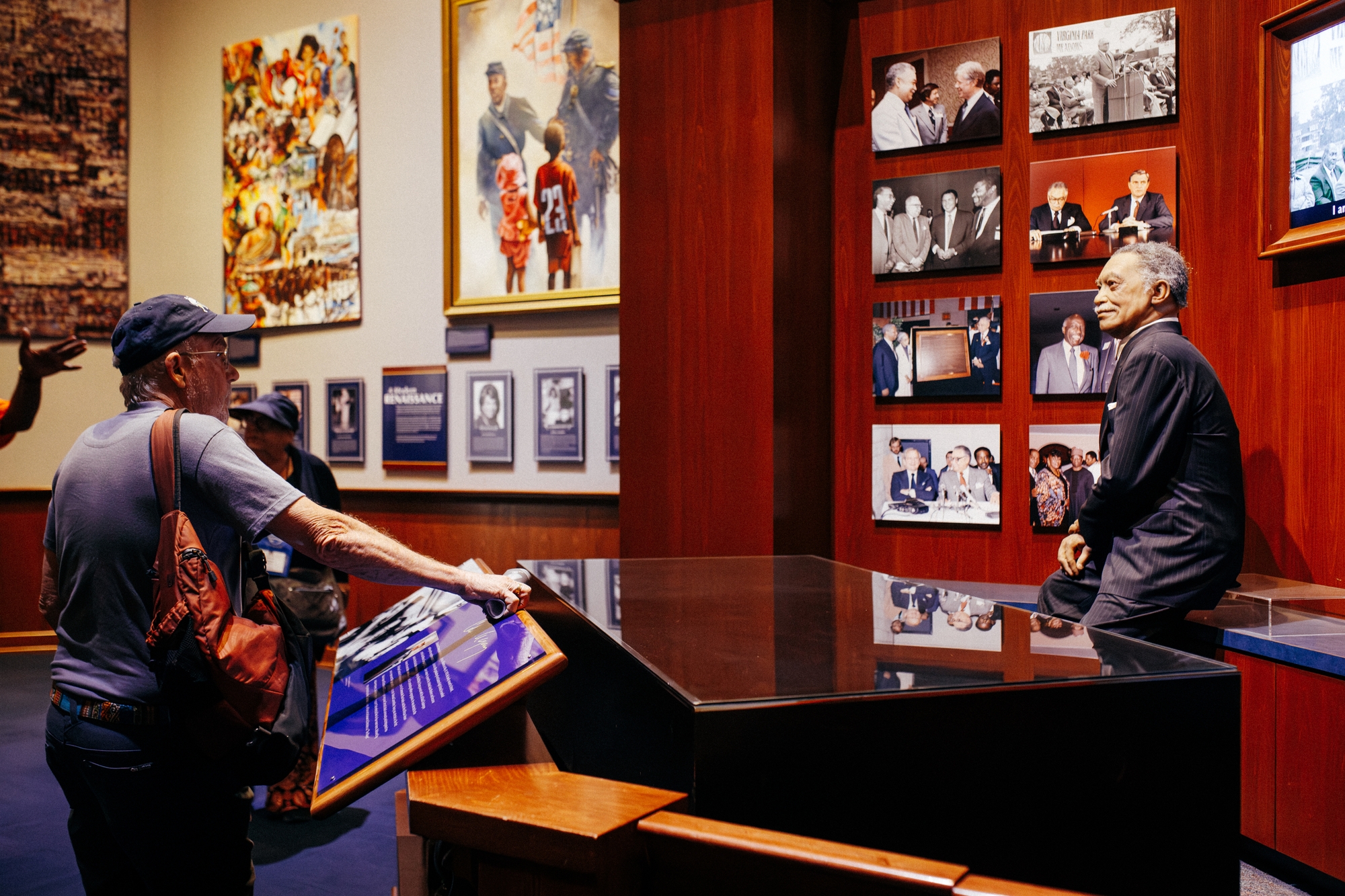
The Charles H. Wright Museum has been instrumental in sharing the history of African Americans in Detroit and America since 1997. It was previously known as the International Afro-American Museum (original name), founded in 1965 and opened in 1966 on West Grand Boulevard.
Detroit Drives the World
In 1901, Ransom Olds created the first assembly line system for building cars. In 1913, Henry Ford improved on the idea by setting up a conveyor-belt moving assembly line. To attract the large number of workers needed for his Model T Factory in Highland Park, Michigan, Ford shortened the workday to 8 hours a day, 40 hours a week, and doubled the factory's daily pay to $5 a day (about $200 in today's dollars). And he offered this pay to all workers - including Black people.
"Although the factories were segregated, with Black men working mainly in grinding and sanding and in the foundries, it was a far better economic option than what faced most Black people in the Jim Crow South," explains Jamon Jordan, the Official Historian of the City of Detroit. He adds, "Moreover, immigrants from Europe, Mexico, and the Middle East came to Detroit seeking opportunities directly or indirectly connected to the auto industry."
Jordan notes that Detroit's manufacturing history has had the greatest impact on America.
Jeremy Dimick at the Detroit Historical Museum agrees. "The affordable automobile pioneered by Henry Ford dramatically changed the world we live in, not just in America, but the entire world. Think about how different the world would be without widespread access to automobiles. As mentioned above, cars were manufactured in many other cities, but they were so expensive that they were essentially toys for the wealthy and had little impact because so few people could afford them. Detroit made them affordable for regular people."
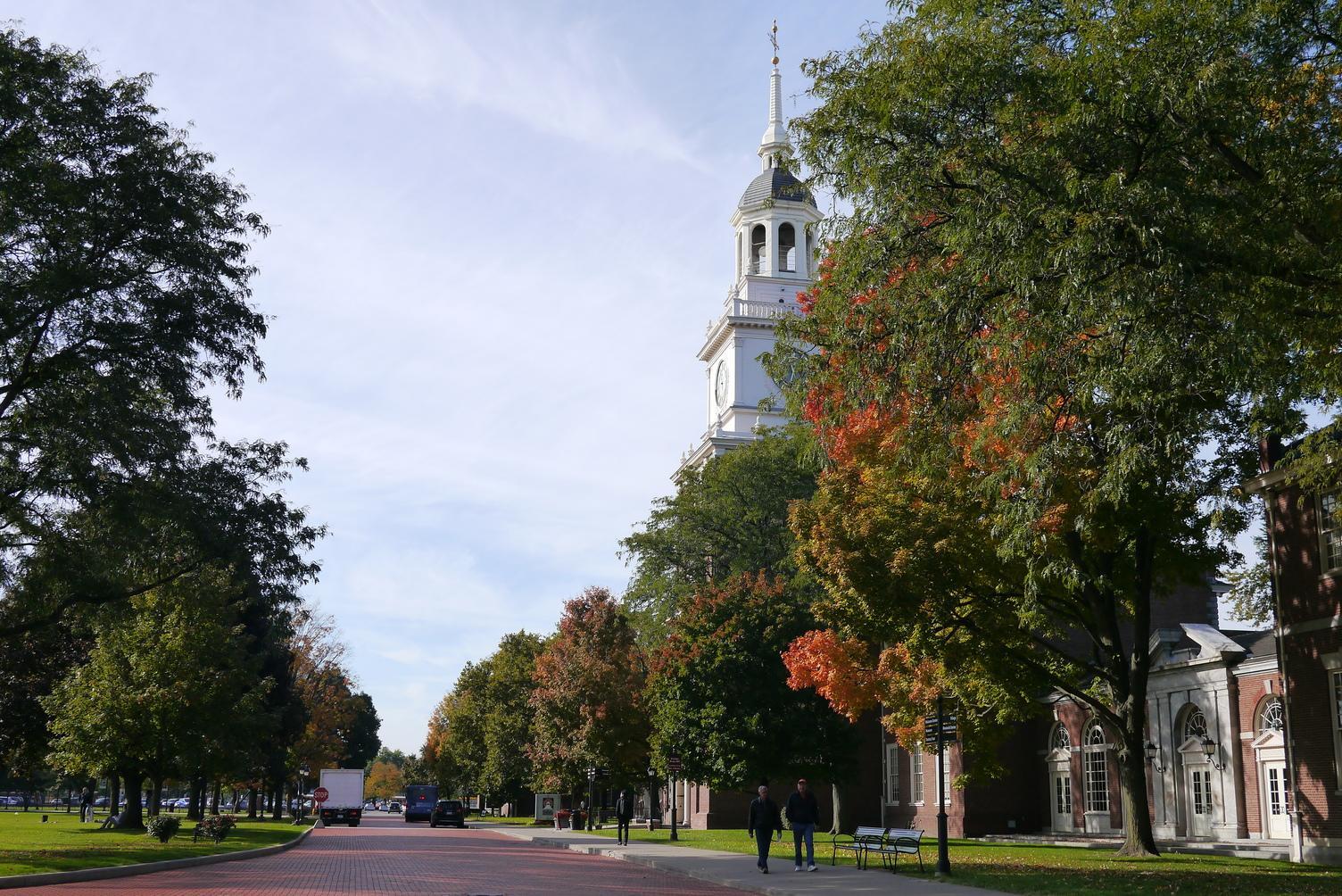
The Henry Ford Museum of American Innovation is one of the best places to dive deep into the stories that shaped Detroit's most significant impact on America. On their website, they note that they are "more than a museum — we're a force for change, and we empower every individual to make a difference through innovation, ingenuity and resourcefulness."
"The Henry Ford offers perspective and inspiration so that anyone can create a better future and truly make history."
At The Henry Ford, you can ride in one of those Model T cars that changed our city and our country.
Detroit and the Civil Rights Movement

The Henry Ford famously has on display the bus where Rosa Parks sat in a demonstration against segregation. In June, Greenfield Village will open The Jackson Home, now more than 100 years old, is a unique time capsule documenting one of the most momentous movements in U.S. history: the Selma to Montgomery marches — a sustained effort to ensure that all Americans would have the civil rights and voting rights promised to them.
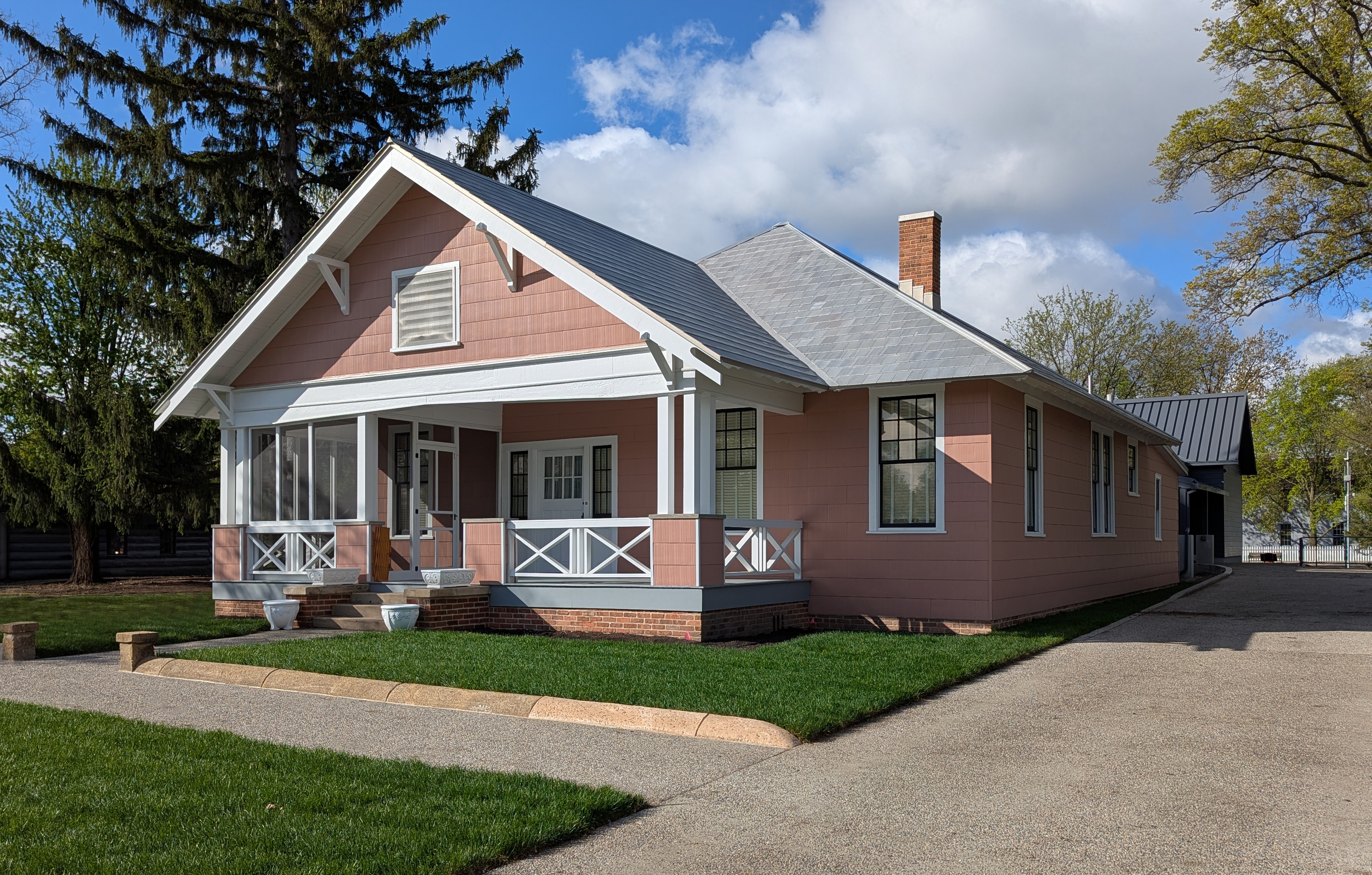
Heather Bruegl is the Curator of Political and Civic Engagement at The Henry Ford, she explains, "The Jackson home was a home that was located in Selma, Alabama, and it's now here in Dearborn, in Greenfield Village, but it was the home of Dr. Sullivan Jackson and Mrs. Richie Jean Sherrod Jackson, and the home was basically ground zero for the voting rights movement in Selma, and was the staging ground for a number of civil rights leaders who came through, including Dr Martin Luther King, Jr, who used that home as a base camp to plan the Selma to Montgomery marches, and also where drafts of the Voting Rights Act were written."
Of the home, The Rev. Dr. Wendell Anthony, Chairman of the Detroit Branch NAACP and Member of the NAACP National Board of Directors, writes. "The Henry Ford is magnifying not just Dr. King’s dream to show where he actually laid out a plan to inspire future generations to continue their march towards justice, voting rights, and civil rights...."
Relocated in two large pieces to the museum, the Jackson Home will open in June, and reservations are suggested.
That Motown Sound–Detroit's Cultural Impact
Detroit’s musical legacy is as integral to its identity as the auto industry. Few cities can claim a cultural influence as far-reaching and enduring. From the soulful melodies of Motown to the distinctive energy of Hip-Hop, Detroit’s artists have redefined genres and inspired generations. In the spirit of recognizing the individuals who helped build and grow this legacy, I’ve chosen four artists who stand as pillars of our rich musical history. These are the voices and talents that put Detroit's music scene on the map and continue to attract visitors.
In the 1920s-1950s, Black Bottom was a cultural and musical hub in the Midwest. Known for its jazz and blues clubs, bars, and theaters, the Paradise Valley district within Black Bottom was a focal point of Detroit's Black entertainment scene, with many clubs and theaters owned by Black Detroiters. It was in this fertile ground that our musical history was planted and grew.
Motown may be Detroit's most recognizable musical legacy. The Motown Museum writes on their website, "As an irresistible force of social and cultural change, the legendary Motown catalog made its mark on not just the music industry, but society at large. With its catchy melodies and universal messages, the Motown Sound has become one of the most significant musical accomplishments and stunning success stories of the 20th century."

The rock scene in Detroit has also made a lasting imprint on American culture.
Detroit rockers Mitch Ryder and Bob Seger are both known for their deep and soulful vocal styles. Other rock bands include: MC5, The Stooges, Alice Cooper, and more. With enthusiastic crowds filling the venues throughout the region, Detroit became a key stop on nearly every national rock and roll tour and helped inspire a generation of Detroit rockers--including Jack White of the Award-Winning band, The White Stripes.
If the Motown Sound and the Detroit Rock Scene had a baby, it would likely be named Techno.
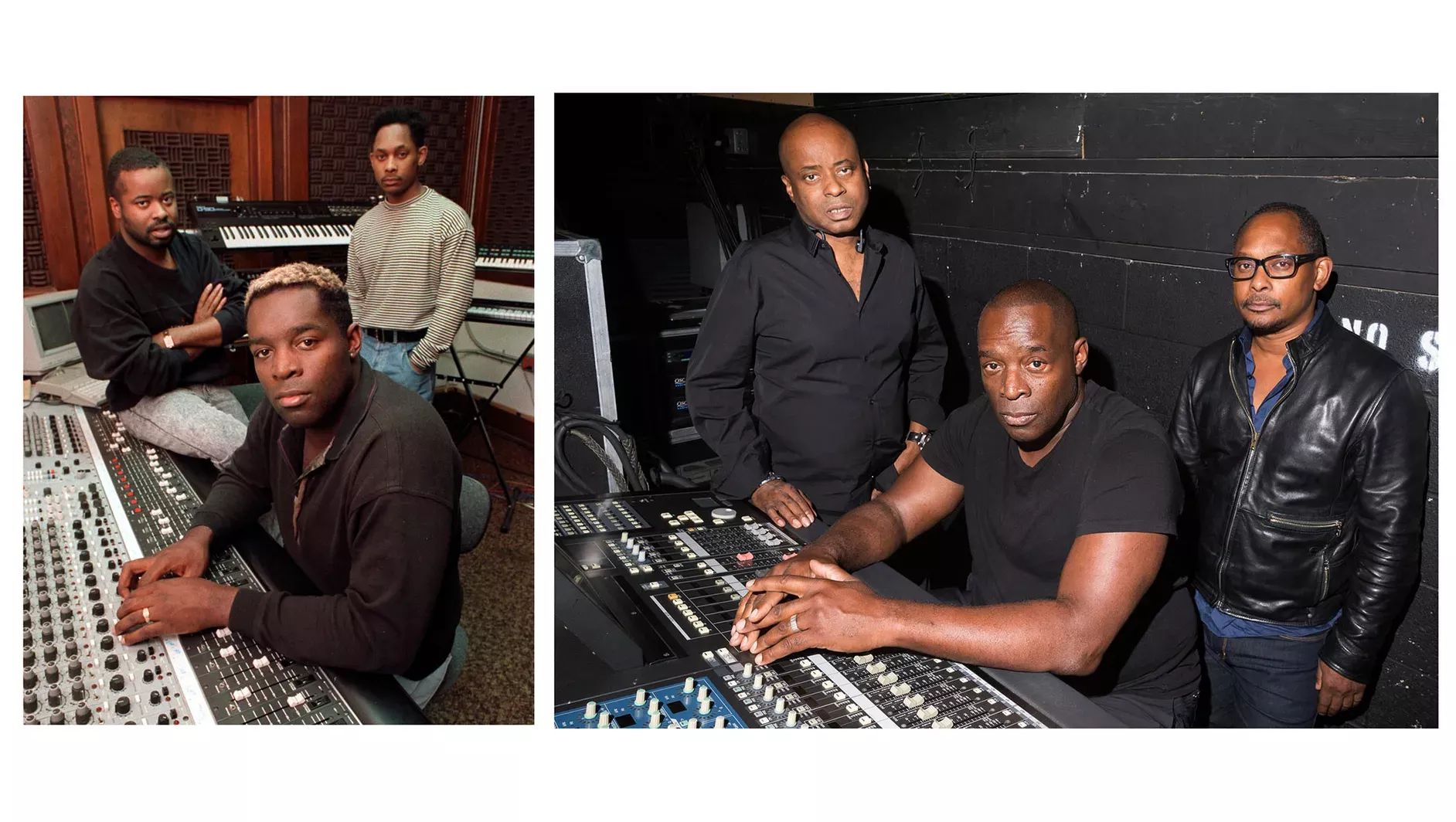
In the early 1980s, three high school friends in the Detroit suburb of Belleville experimented by mixing disco, dance, and house music. Juan Atkins, Derrick May, and Kevin Saunderson, or the "Holy Trinity" as they became known, along with Eddie Fowlkes, are considered the founders of Techno, the altogether new sound that emerged from this musical fusion.
Detroit Hip Hop soon followed. The late 90s and early 2000s saw a rapid emergence of stellar hip-hop artists. Slum Village would be one of the first international acts, and led by producer James "J. Dilla" Yancey, the group would have one of the most powerful impacts on all hip-hop music and culture. While the musician was not largely popular during his short life, having passed away at 32 in 2006, he has since become a global phenomenon with celebrations of his life taking place around the globe and a street named in his honor in his hometown.
Eminem is among the best-selling music artists of all time, with estimated worldwide sales of over 220 million records. He was the best-selling music artist in the United States for the 2000s, placing third for the 2010s. He was the first artist to have ten albums consecutively debut at number one on the Billboard 200 chart. Additionally, Detroit and many Detroit artists owe Eminem a debt of gratitude, as he signed both D12 and Obie Trice, who also signed artists of their own. He cosigned a number of other artists, and with his 2002 film, 8 Mile, gave permanent credence to our city's battle rap legacy and earned an Academy Award for Best Original Song in the process.
The City You Love to Hate: Detroit's Reputation Doesn't Define Us
"Looking at it from a historical perspective, it has to do with economic opportunity, or the lack of economic opportunity as a pretext for what our society deems good or bad," says Jeremy Dimick. "Because Detroit scaled up so quickly and completely in the name of the automobile, it was hit much harder by the worldwide effects of deindustrialization in the 1970s and 80s. In the eyes of outsiders, it goes from having economic opportunity (good) to not having economic opportunity (bad), so it becomes an easy target, and Detroit’s poverty and violent crime became the focus of national news stories, contributing to its notoriety."
Detroit has a changing population; however, it still hovers at about 80% African American, and experts note an income and skills gap that keeps the median income around $45,000, $41,000 less than the median Detroit-area job salary of $86,000.
However, there is still optimism. According to the University of Michigan, "By 2030, Detroit residents’ average wages are forecast to rise to 53.6% of the average wage earned at jobs in city establishments—the highest reading since the start of the researchers’ data in 2010."
Detroit's economy is expected to see moderate growth and resilience through 2030, with blue-collar sectors, once again, through automotive manufacturing, driving job gains.
As far as our lasting legacy, Jeremy Dimick says, "I don’t think cities can have a legacy. People can have legacies because when they are gone, they stop adding to their story. Detroit isn’t going anywhere, so its story will never end. Because of that, its legacy will never be set in stone; it will always keep evolving day by day, generation by generation, and vary depending on who you ask, but more importantly, when you ask them."
Detroit's Official Historian Jamon Jordan is more specific, "Detroit's lasting legacy is its history of Black people - their movements, their institutions, their music, their businesses, their culture."
He notes that "an important part of being the city’s historian is that it is my job to remind us not to forget. Because so much of Detroit’s greatness is not as apparent as it once was, someone has to remind us not to forget."
He adds, "My job is to remind us not to forget that Detroit changed the world. To remind us not to forget that Detroit matters."
EXPLORE MORE

Detroit’s Labor Landmarks That Tell the Story of the Working Class
Discover Detroit’s labor landmarks and learn how the working class shaped the Motor City’s history, industry, and culture.

Best Things to Do in Dearborn
Discover the gem next door. Metro Detroit’s cultural heart of food, history, and community.

Black History Is Detroit History Inspo Guide
A starting point for planning your trip, featuring stories and recommendations that bring Detroit to life.