There’s a cliché that travel makes you find yourself. I won’t argue against this—after all, most cliches stem from overtold truths—but I do think this discussion requires more nuance.
I believe in the power of travel to change a person, but I also believe that intentional travel is key to that change. The destination, and perhaps more importantly your motivations for visiting there and how you confront your preconceptions about that place, matter.
Often when people say that “travel changes you” or that you “travel to find yourself,” they are referring to travel in far flung destinations, with cultures that feel alien to the one they were raised in. They’re not often talking about cities you grew up down the (literal) road from, like Detroit is for me.
I grew up in Michigan, so Detroit certainly isn’t exactly exotic to me. However, I’ve learned that you don’t always need to travel half-way across the world to hear from diverse voices or be welcomed at a stranger’s table. Sometimes the best travel experiences lie in your own back yard, and the greatest catalysts for personal growth hide in places that go overlooked.
As someone who’s a professional travel writer and has been blessed to visit over 50 countries, it often surprises people when I wax poetic about Detroit as a travel destination.
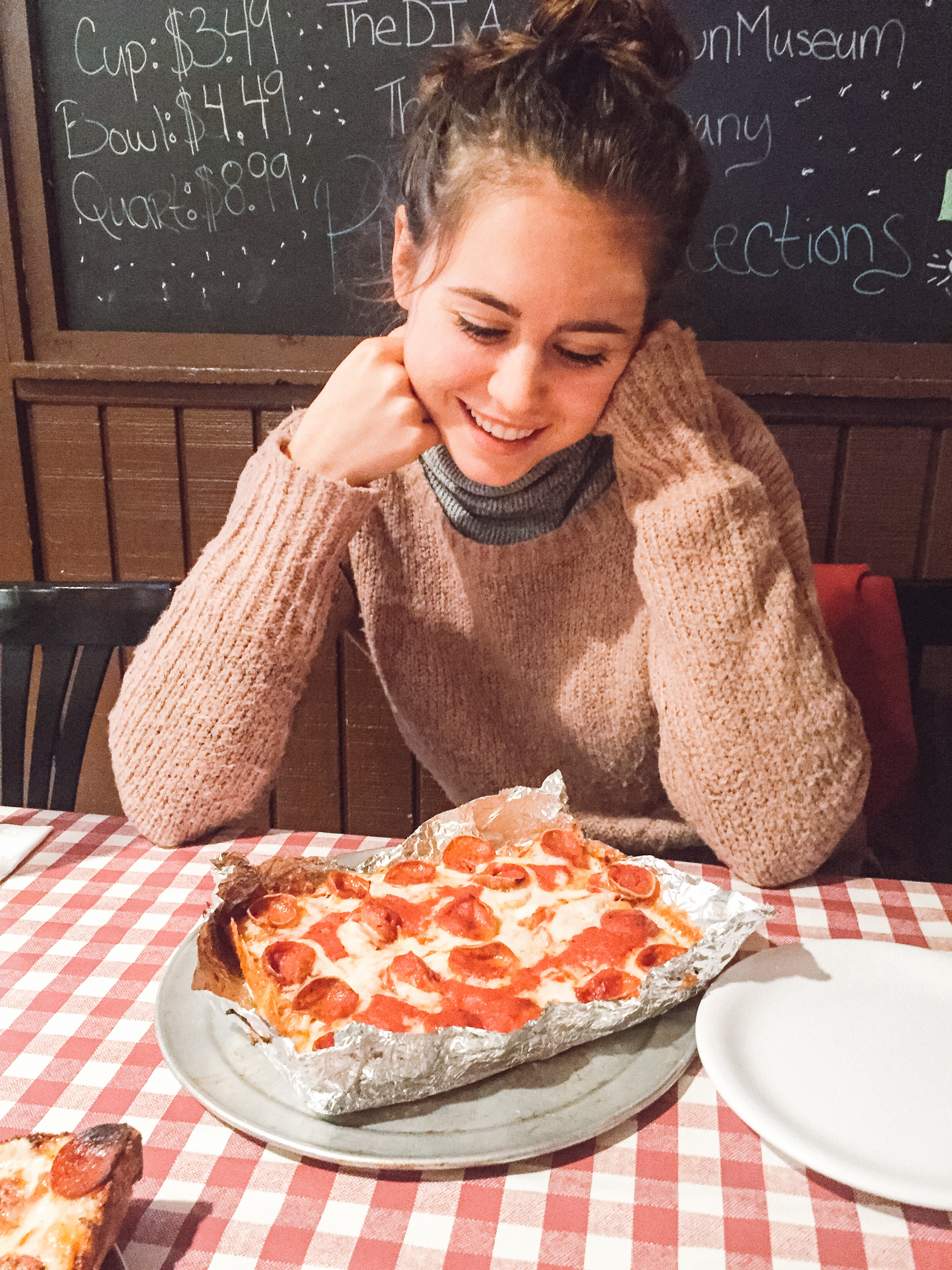
These days, I live in London, and I can’t tell you the number of times I’ve peer-pressured a British person into trying their first Detroit-style pizza, or held up my hand like a Michigan-shaped map and pointed to “Detroit” at the base of my thumb.
So, why do I feel so passionate about this underdog midwestern city?
In short, Detroit is like nowhere else. It has many names: Motor City, Hockeytown, Motown, each nodding to the city’s great cultural contributions. More recently, the name Comeback City is thrown around, with words like revitalized, renaissance, and rebirth added for good measure. This doesn’t tell the full story, though, and most Detroiters would argue that Detroit isn’t “back,” because there have always been Detroiters fighting to make the city a better place.
As a lifelong visitor to Detroit, I can say that when you choose to visit Detroit, you are also choosing to become part of that story, in a way that I personally haven’t experienced elsewhere.
Growing up in Michigan, I was raised in a relatively sheltered, predominantly white suburb. I wasn’t from Detroit, but the city colored my childhood memories nonetheless. I remember sketching on easels with my grandmother at the Detroit Institute of Arts, cheering on the Red Wings at The Joe, running through creeks with my cousins in Farmington Hills, and eating Greek diner food with my uncle in Rochester Hills. As a family we fought over Buddy’s pizzas and lamented the Lions’ losing streak (I think some of my first words were actually “Lions stink”—I’ll happily bite my words now, though).
Whilst many of my happy childhood memories orbit Detroit, there was also the ever-present narrative that Detroit was a struggling place facing hard times. The 2008 recession brought Detroit, the auto industry, and subsequently many of my family and friends’ families, to its knees. These stories—some true, others over-exaggerated—were an undercurrent throughout my childhood.
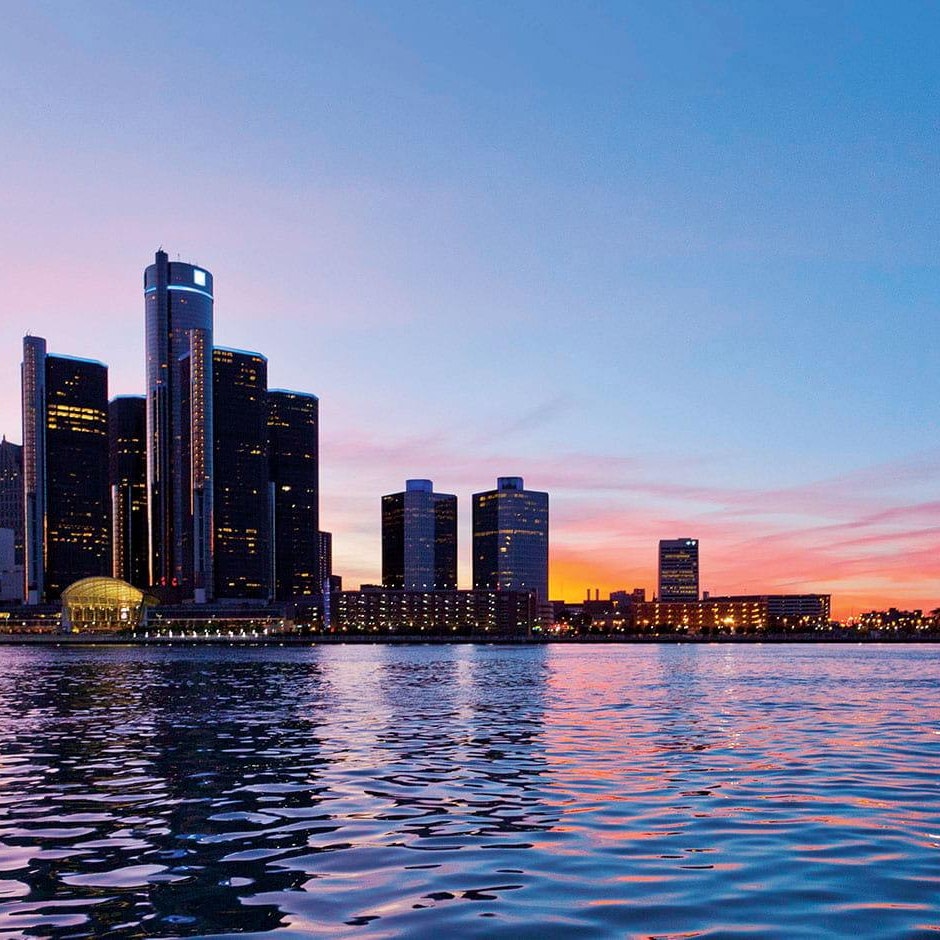
There’s no doubt that, today, conditions in Detroit have improved. Look to the transformations of Michigan Central Station, the Shepherd art museum, the sky-high Hudson Building, or the evolving Motown Museum as evidence. The best example might be the stunning and continually-expanding riverwalk, which has connected Detroit neighborhoods and made the riverfront a safe space for not just walking and biking, but forming community.
Today, Detroit is a thriving hub of development, but it’s more than that. It’s one of the nation’s few majority Black cities, where many Detroiters stuck out the hard times and refused to give up on their home. The people are what make Detroit so special, and unlike anywhere else, but you can’t really understand that unless you visit and meet them.
For me, real personal change came in confronting stereotypes of Detroit. I remember my first time back in Detroit as a young adult, after I’d returned from college out-of-state and study abroad out-of-country. What I found was not an abandoned or unsafe city, but a deeply proud and even more deeply welcoming community.
I spent that weekend riding a vintage model A vehicle to Belle Isle, and chatting to locals from Milwaukee Junction. I lingered over brunch at Folk in Corktown, where I devoured waffles with a pistachio butter I still dream of. I wandered the aisles of Eastern Market, the nation’s largest outdoor farmer’s market and a gathering place for Michigan farmers and artisans. As a souvenir, I took home a book carefully chosen from the endless shelves of John K. King Used Books, which is the country’s largest used and rare bookstore.
That trip lit a match in me. And the kindling wasn’t exactly Detroit the place, but the ways that intentionally choosing to visit Detroit challenged me to address my own misconceptions.

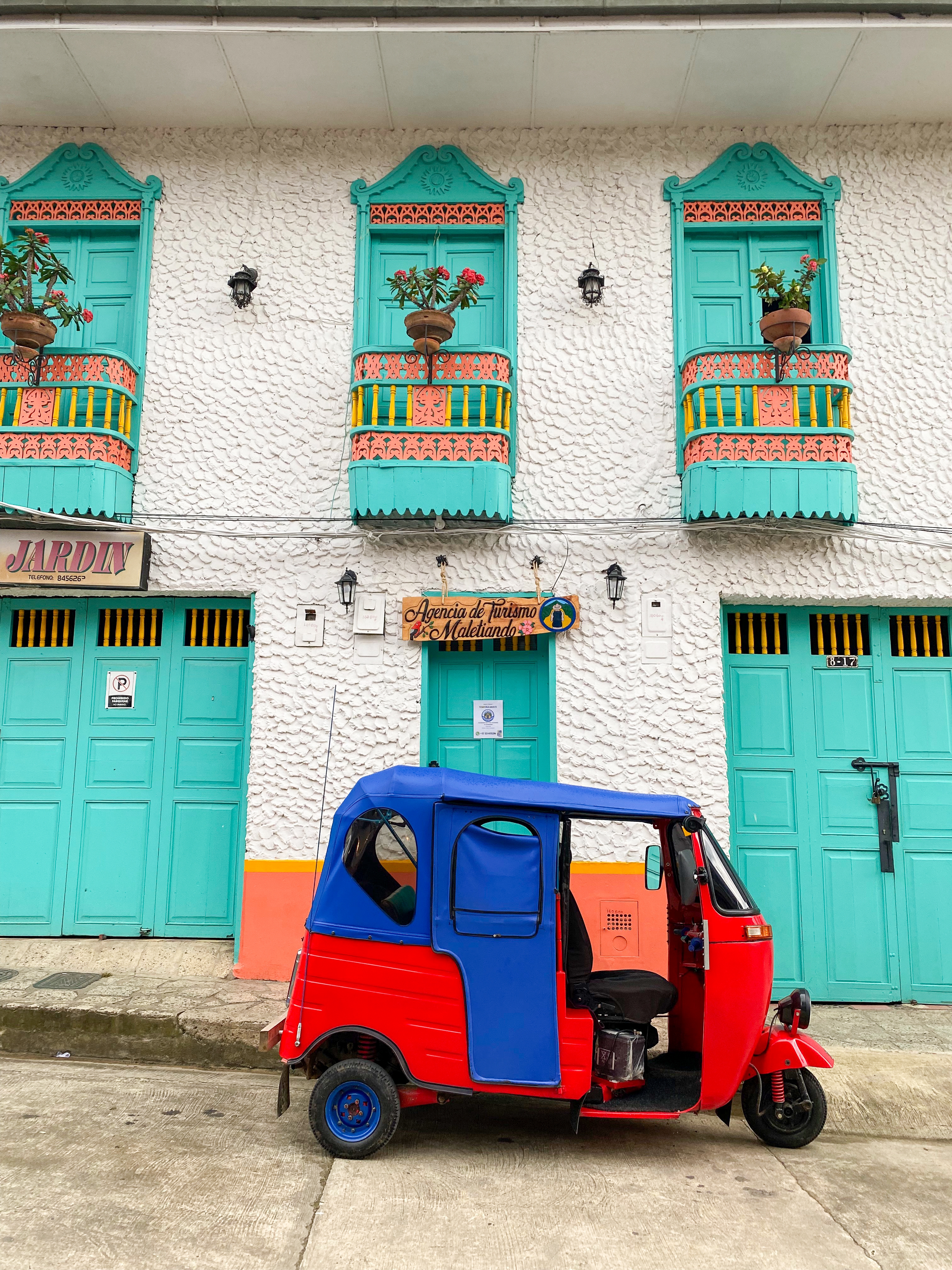
In my experience, travel teaches you that the world is wider, the people kinder, and the possibilities more profound than most of us are raised to believe. I have traveled across six continents, and I’ve made that discovery time and time again: on the arduous trek to Everest Base Camp, the winding motorbiking loops of northern Vietnam, the maze-like markets of Marrakech, and the pristine beaches of Colombia. Everywhere I’ve visited (and the people I’ve met there) has changed me in some way, or brought to the surface parts of me that would’ve otherwise remained hidden: bravery, patience, confidence, determination, openness, and perhaps most importantly the willingness to be wrong, learn, and change.
It's true that travel can change you, but it can also reveal who you always were as a person, and who you have the potential to become.
Every destination I’ve visited has changed me in some way, but I always feel a pull back to Detroit in a way that other destinations don’t call to me.
Since that visit many years ago as a newly-fledged adult, I’ve spent countless time in Detroit, and I’ve seen the city evolve in powerful ways. I’ve witnessed the husk of Michigan Central Station completely resurrected into the thriving hub for tech and transportation development that it is today, and the energy it’s brought to the Corktown neighborhood. I’ve watched the view from the front window at my favorite pancake joint—Hudson’s Café—completely transform from a demolished building site into the brand-new 49-story tall Hudson’s Detroit development.
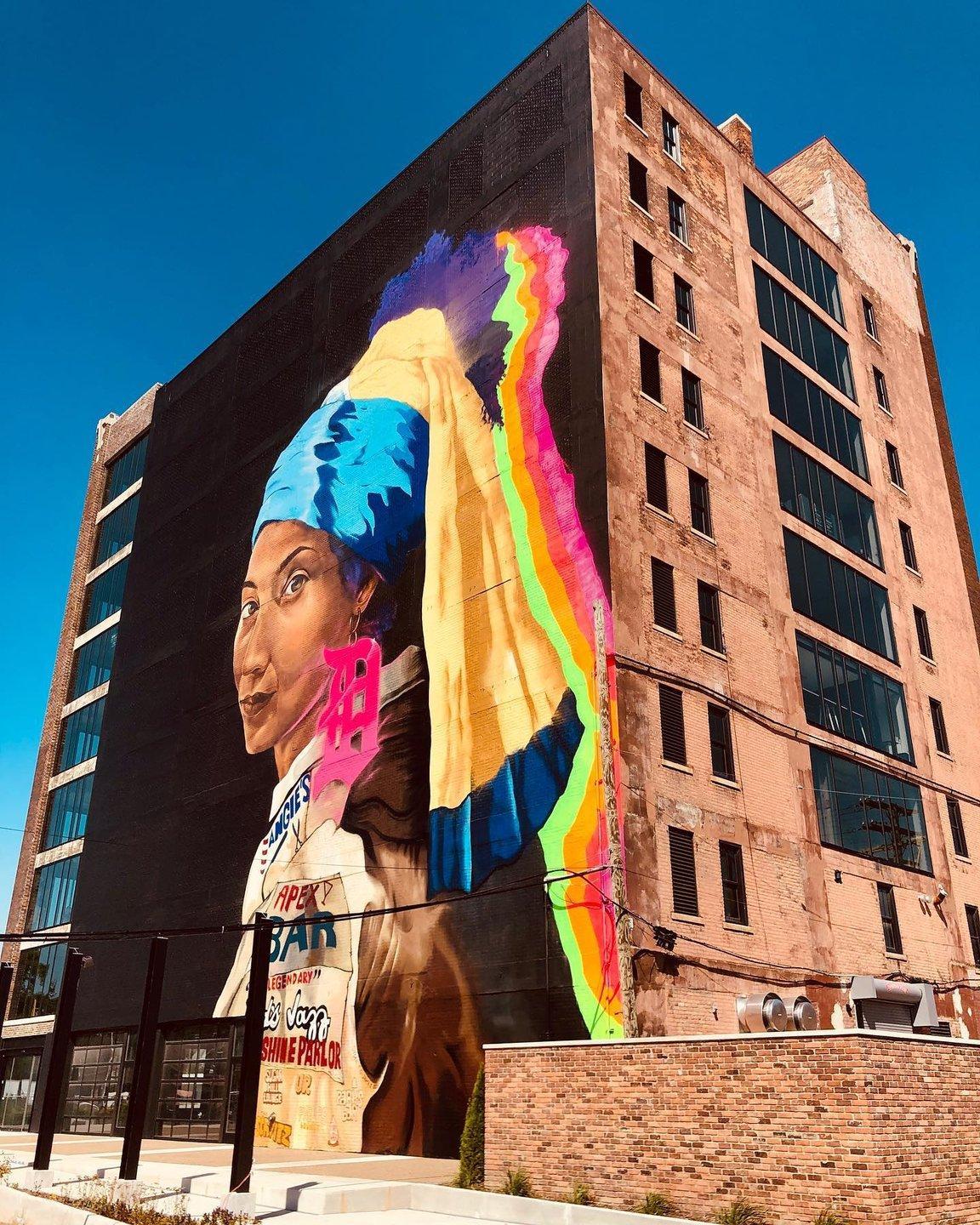
I’ve also had the honor of interviewing many Detroiters for my travel writing assignments over the years. I spoke to Sydney G. James, a talented muralist raised in Detroit, who’s responsible for many of the city’s most iconic murals, including my personal favorite: Girl with a D Earring. She spoke of Detroit’s resurgence, but also the dangers of erasing its history during that resurgence.
Hamissi Mamba, a refugee from Burundi and the owner of James Beard Award-nominated Baobob Fare, an East African restaurant on Woodward Avenue, has offered me his personal food recommendations in the city. (The chicken and waffles at Babo, the seaweed kimchi at Ima, and the crepes from the French Cow in Eastern Market are some of his recs).
I’ve also spoken with Robin Terry, CEO of the Motown Museum, which is one of Detroit’s most iconic experiences for visitors. The museum was founded by her grandmother Esther Gordy Edwards to honor the Motown sound that was created in Detroit. Terry grew up around Motown Musicians, and today she’s helming the $75 million, unprecedented expansion of the Motown Museum.
The spontaneous interactions with local Detroiters during my visits are just as powerful. I’ve had enlightening conversations with Detroiters everywhere from the flower stalls at Eastern Market to the historic Avenue of Fashion. I’ve chatted to locals over lattes at The Commons, a boutique coffee shop that’s also a community laundromat, or over fried plantains at La Fonda Street, a humble Latin American restaurant on Kercheval.
One of my favorite spots that embodies the continual evolution of Detroit is the Heidelberg Project, an outdoor art installation in the McDougall-Hunt neighborhood. The project takes up roughly two blocks on Heidelberg Street, and was created by artist Tyree Guyton, who grew up in the large white house covered in multi-color polka dots (affectionately called the Dotty Wotty House).
The Heidelberg Project is covered in found objects (think: broken TVs, a mostly-buried hot pink car, and thousands of stuffed animals), and was created by Guyton in an effort to protect his neighborhood from urban blight and arson.
I’ve lost count of how many times I’ve visited the Heidelberg Project over the years, and the many ways it’s changed. Some changes are subtle, like the face masks that adorned many of the stuffed animals during the pandemic. Others are more significant. Now in its 40th year, the Heidelberg Project has received new investment to form a community educational space and host artists in residence.
There are endless possibilities when it comes to choosing your next travel destination, but it’s worth asking yourself first what you want out of that destination. In Detroit, what’s old is made new, but in this newness the city’s history is not forgotten.
That trajectory, which I’ve witnessed throughout my life, makes Detroit a transformative place to visit. It’s a city built by grit and determination, through overcoming hardships, and never giving up. Visiting Detroit poses the question: if an entire city can do that, surely I can, too?
EXPLORE MORE

9 Ways to Digital Detox in Detroit
Need a reset? What are the best ways to digital detox in Detroit?

One City. 10 Obsessions.
These are the 10 things Detroit does better than anywhere else.
Make Detroit Your Gateway to America’s Heartland
Are you planning a road trip soon?